
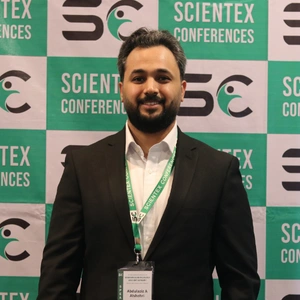
Abdulaziz A.Alshehri
king saud university, Saudi ArabiaPresentation Title:
Cartilage dorsum augmentation with composite soft-tissue coverage in thick-skinned rhinoplasty
Abstract
Background: Thick-skinned noses often exhibit a combination of diminished dorsal height, reduced structural definition, inadequate radix projection, and a short overall nasal length. The dense soft-tissue envelope conceals underlying cartilaginous detail and frequently restricts refinement, especially in cases requiring dorsal augmentation. Achieving a smooth, natural dorsal contour in these patients can be difficult due to variability in envelope thickness and the tendency for cartilage edges to become visible beneath the skin.
Objectives: To evaluate the functional and aesthetic outcomes of dorsal augmentation using autologous cartilage combined with selective use of the native nasal composite soft-tissue layer as dorsal coverage.
Methods: Eighty-two patients with thick-skinned nasal anatomy underwent autologous cartilage dorsal augmentation with composite soft-tissue coverage. The composite layer was harvested as a single continuous sheet from the tip region. It was applied over layered or structured cartilage grafts to enhance dorsal contour smoothness and reduce graft visibility. Outcomes were assessed through long-term clinical examination, standardized photographic analysis, and validated patient-reported outcome measures including ROE and NOSE scores.
Results: Dorsal contour smoothness, aesthetic-line continuity, and tip definition improved in all patients. No cases of infection, graft visibility, graft displacement, or vascular compromise were observed. Mild transient supratip edema occurred in 11 percent of patients and resolved with conservative management. ROE scores increased significantly after surgery, and NOSE scores demonstrated meaningful functional improvement. Long-term follow-up demonstrated stable results .
Conclusions: This technique provides a reliable method for managing the unique challenges of thick-skinned, low dorsum, or short nose anatomy.
Biography
Abdulaziz A. Alshehri, post-graduate year 4 and chief resident of the Saudi Board, Jeddah. He has multiple publications.

Organization Location
1309 Coffeen Avenue, STE 1200, Sheridan, Wyoming 82801, USA
General Enquiry
contact@scientexconferences.com
Finance Enquiry
finance@scientexconferences.com
Call us at
USA : +1 217 468 7571