
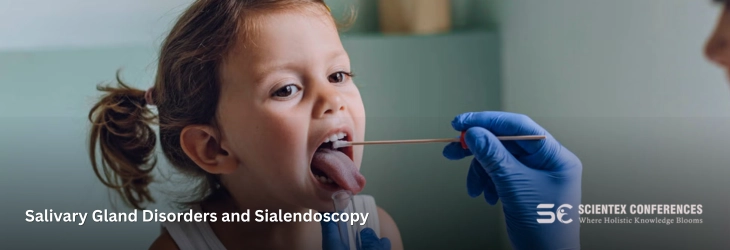
Track: Salivary Gland Disorders and Sialendoscopy
Session Overview:
This session aims to provide a comprehensive exploration of salivary gland disorders and the evolving role of sialendoscopy in their diagnosis and management. Salivary gland diseases encompass a diverse range of conditions affecting the parotid, submandibular, sublingual, and minor salivary glands. These disorders can result in pain, swelling, recurrent infections, xerostomia, and impaired oral function. Participants will examine the pathophysiology, clinical presentation, and diagnostic evaluation of obstructive, inflammatory, autoimmune, and neoplastic salivary gland diseases. The session will also highlight advancements in minimally invasive techniques, particularly sialendoscopy, which has transformed the management of salivary duct disorders by enabling targeted interventions while preserving gland function. Attendees will gain valuable insights into contemporary treatment strategies, multidisciplinary care models, and future developments in salivary gland surgery and endoscopy.
Recent Developments:
Recent advancements in salivary gland management have significantly improved diagnostic accuracy and treatment outcomes. High-resolution ultrasonography, magnetic resonance sialography, and cone-beam computed tomography have enhanced the evaluation of salivary gland pathology and ductal anatomy. Sialendoscopy has become an increasingly important gland-preserving technique for managing salivary stones, ductal strictures, and chronic inflammatory conditions. Innovations in micro-instrumentation, laser-assisted lithotripsy, and combined endoscopic-surgical approaches have expanded the range of treatable conditions while minimizing patient morbidity. Additionally, research into regenerative medicine, salivary gland tissue engineering, and artificial intelligence-assisted diagnostics is opening new possibilities for personalized and minimally invasive salivary gland care.
Sub Tracks:
Sialolithiasis and Salivary Duct Obstruction:
This sub-track focuses on the diagnosis and management of salivary stones and ductal obstruction, among the most common salivary gland disorders. Discussions will cover pathogenesis, imaging techniques, minimally invasive treatment options, and strategies for preserving gland function.
Sialadenitis and Inflammatory Salivary Disorders:
Explore acute and chronic inflammatory conditions affecting the salivary glands. Topics will include bacterial and viral infections, recurrent gland inflammation, diagnostic evaluation, medical management, and indications for surgical intervention.
Autoimmune Salivary Gland Diseases:
This sub-track examines autoimmune disorders that impact salivary gland function, including Sjögren’s syndrome and other immune-mediated conditions. Discussions will focus on pathophysiology, clinical manifestations, diagnostic criteria, and multidisciplinary treatment approaches.
Salivary Gland Tumors and Neoplasms:
Investigate the diagnosis and management of benign and malignant salivary gland tumors. Topics will include imaging assessment, histopathological evaluation, surgical treatment, reconstructive considerations, and advances in oncologic management.
Diagnostic Imaging and Salivary Endoscopy:
This sub-track highlights modern diagnostic tools used in the assessment of salivary gland disorders. Participants will explore ultrasonography, sialography, magnetic resonance imaging, computed tomography, and endoscopic evaluation techniques that guide treatment planning.
Interventional Sialendoscopy Techniques:
Examine the principles and clinical applications of sialendoscopy in managing salivary gland disease. Discussions will cover ductal dilation, stone retrieval, laser-assisted procedures, stricture management, and advances in endoscopic instrumentation.
Salivary Gland Preservation and Reconstruction:
This sub-track focuses on treatment approaches that aim to preserve salivary gland function while minimizing morbidity. Topics will include gland-sparing procedures, reconstructive techniques, functional outcomes, and postoperative rehabilitation strategies.
Emerging Innovations in Salivary Gland Management:
Explore cutting-edge developments shaping the future of salivary gland care. Discussions will include regenerative therapies, tissue engineering, artificial intelligence-assisted diagnostics, advanced endoscopic technologies, personalized treatment strategies, and future directions in salivary gland research and clinical practice.
Scientific Highlights
- Anatomical and Physiological Disorders of ENT
- Infectious Diseases in Otorhinolaryngology
- Allergy, Immunology and Immunotherapy in ENT
- Rhinology and Sinus Surgery
- Nasal Polyposis and Biologic Therapy
- Sinus Headache and Facial Pain Management
- Otology and Neurotology
- Hearing Science and Cochlear Implant Innovations
- Vertigo and Balance Disorders
- Laryngology and Voice Disorders
- Dysphagia and Swallowing Rehabilitation
- Sleep Apnea and Airway Disorders
- Pediatric Otolaryngology
- Head and Neck Surgery
- Salivary Gland Disorders and Sialendoscopy
- Thyroid and Parathyroid Endocrine Surgery
- Craniofacial and Maxillofacial Surgery
- Advanced Endoscopic and Minimally Invasive ENT Surgery
- Robotic ENT Surgery
- Future Trends in Otorhinolaryngology

Organization Location
1309 Coffeen Avenue, STE 1200, Sheridan, Wyoming 82801, USA
General Enquiry
contact@scientexconferences.com
Finance Enquiry
finance@scientexconferences.com
Call us at
USA : +1 217 468 7571