

Track: Sinus Headache and Facial Pain Management
Session Overview:
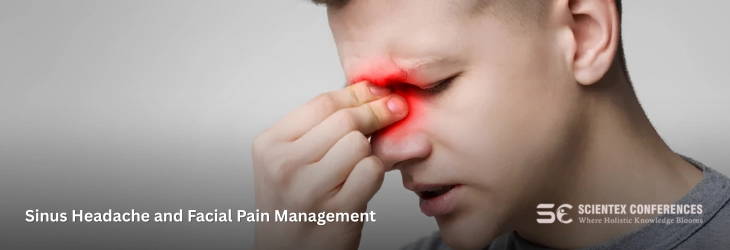
This session aims to provide a comprehensive exploration of sinus headache and facial pain management, emphasizing the complexities involved in diagnosis, treatment, and long-term patient care. Facial pain is a common complaint encountered in otolaryngology and may result from a wide range of conditions affecting the nose, sinuses, cranial nerves, and surrounding structures. Accurate differentiation between true sinonasal disease and non-sinonasal causes such as migraine, neuropathic pain, and temporomandibular disorders is essential to avoid misdiagnosis and unnecessary interventions. Participants will examine the pathophysiological mechanisms underlying facial pain, current diagnostic tools, and evidence-based management strategies. The session will also highlight multidisciplinary approaches involving otolaryngologists, neurologists, pain specialists, radiologists, and rehabilitation professionals. Attendees will gain practical insights into improving diagnostic accuracy, optimizing treatment outcomes, and enhancing patient quality of life.
Recent Developments:
Recent advancements in facial pain management have improved the understanding of the relationship between sinonasal disease and headache disorders. High-resolution imaging and advanced endoscopic techniques have enhanced the identification of structural abnormalities and inflammatory conditions contributing to facial pain. Research into neurogenic inflammation and pain pathways has led to improved differentiation between migraine-related symptoms and sinus-related disorders. Novel pharmacological therapies, including targeted biologic agents and neuromodulatory treatments, are expanding treatment options for patients with chronic facial pain. In addition, image-guided interventions, minimally invasive surgical techniques, and multidisciplinary pain management programs are contributing to more personalized and effective patient care.
Sub Tracks:
Sinus Headaches and Chronic Rhinosinusitis:
This sub-track focuses on the relationship between chronic rhinosinusitis and headache symptoms. Discussions will explore inflammatory mechanisms, diagnostic criteria, imaging findings, and treatment strategies designed to reduce sinonasal inflammation and improve symptom control.
Facial Pain Syndromes:
Explore a broad range of facial pain conditions that affect the head and neck region. Topics will include clinical evaluation, differential diagnosis, pain classification systems, and multidisciplinary approaches to managing acute and chronic facial pain syndromes.
Trigeminal Neuralgia and Neuropathic Pain:
This sub-track examines neuropathic facial pain disorders, particularly trigeminal neuralgia. Discussions will cover underlying pathophysiology, diagnostic assessment, pharmacological treatments, minimally invasive procedures, and surgical interventions for refractory cases.
Migraine and Sinonasal Disorders:
Investigate the overlap between migraine headaches and sinonasal symptoms, a common source of diagnostic confusion. Topics will include distinguishing clinical features, diagnostic approaches, comorbidities, and evidence-based management strategies for patients presenting with overlapping symptoms.
Diagnostic Imaging and Endoscopic Evaluation:
This sub-track highlights the role of advanced diagnostic tools in identifying the causes of facial pain. Participants will explore computed tomography (CT), magnetic resonance imaging (MRI), nasal endoscopy, and other evaluation techniques that support accurate diagnosis and treatment planning.
Medical Management of Facial Pain:
Examine pharmacological and non-pharmacological treatment options for facial pain disorders. Discussions will include anti-inflammatory medications, neuropathic pain therapies, biologic treatments, lifestyle modifications, and multidisciplinary pain management approaches.
Surgical Approaches for Facial Pain Relief:
This sub-track focuses on surgical interventions used in carefully selected patients with facial pain associated with sinonasal disease or nerve-related conditions. Topics will include endoscopic sinus surgery, nerve decompression procedures, image-guided techniques, and postoperative outcome assessment.
Emerging Therapies and Pain Management Innovations:
Explore innovative developments shaping the future of facial pain management. Discussions will include neuromodulation technologies, precision medicine approaches, artificial intelligence-assisted diagnostics, regenerative therapies, digital health solutions, and ongoing research aimed at improving long-term outcomes for patients with chronic facial pain.
Scientific Highlights
- Anatomical and Physiological Disorders of ENT
- Infectious Diseases in Otorhinolaryngology
- Allergy, Immunology and Immunotherapy in ENT
- Rhinology and Sinus Surgery
- Nasal Polyposis and Biologic Therapy
- Sinus Headache and Facial Pain Management
- Otology and Neurotology
- Hearing Science and Cochlear Implant Innovations
- Vertigo and Balance Disorders
- Laryngology and Voice Disorders
- Dysphagia and Swallowing Rehabilitation
- Sleep Apnea and Airway Disorders
- Pediatric Otolaryngology
- Head and Neck Surgery
- Salivary Gland Disorders and Sialendoscopy
- Thyroid and Parathyroid Endocrine Surgery
- Craniofacial and Maxillofacial Surgery
- Advanced Endoscopic and Minimally Invasive ENT Surgery
- Robotic ENT Surgery
- Future Trends in Otorhinolaryngology

Organization Location
1309 Coffeen Avenue, STE 1200, Sheridan, Wyoming 82801, USA
General Enquiry
contact@scientexconferences.com
Finance Enquiry
finance@scientexconferences.com
Call us at
USA : +1 217 468 7571